
The Cook Out Tray is one of the best-known customizable fast-food meal formats in the southeastern United States. The familiar approach combines one main dish, two side choices and a beverage. A smaller Jr. Tray is also promoted. Unlike a conventional burger combo, a Cook Out Tray can include more varied items such as hushpuppies, corn dogs or quesadillas at participating locations. This guide explains how to build a tray, compare portions, check upgrades and avoid misleading nationwide price claims.
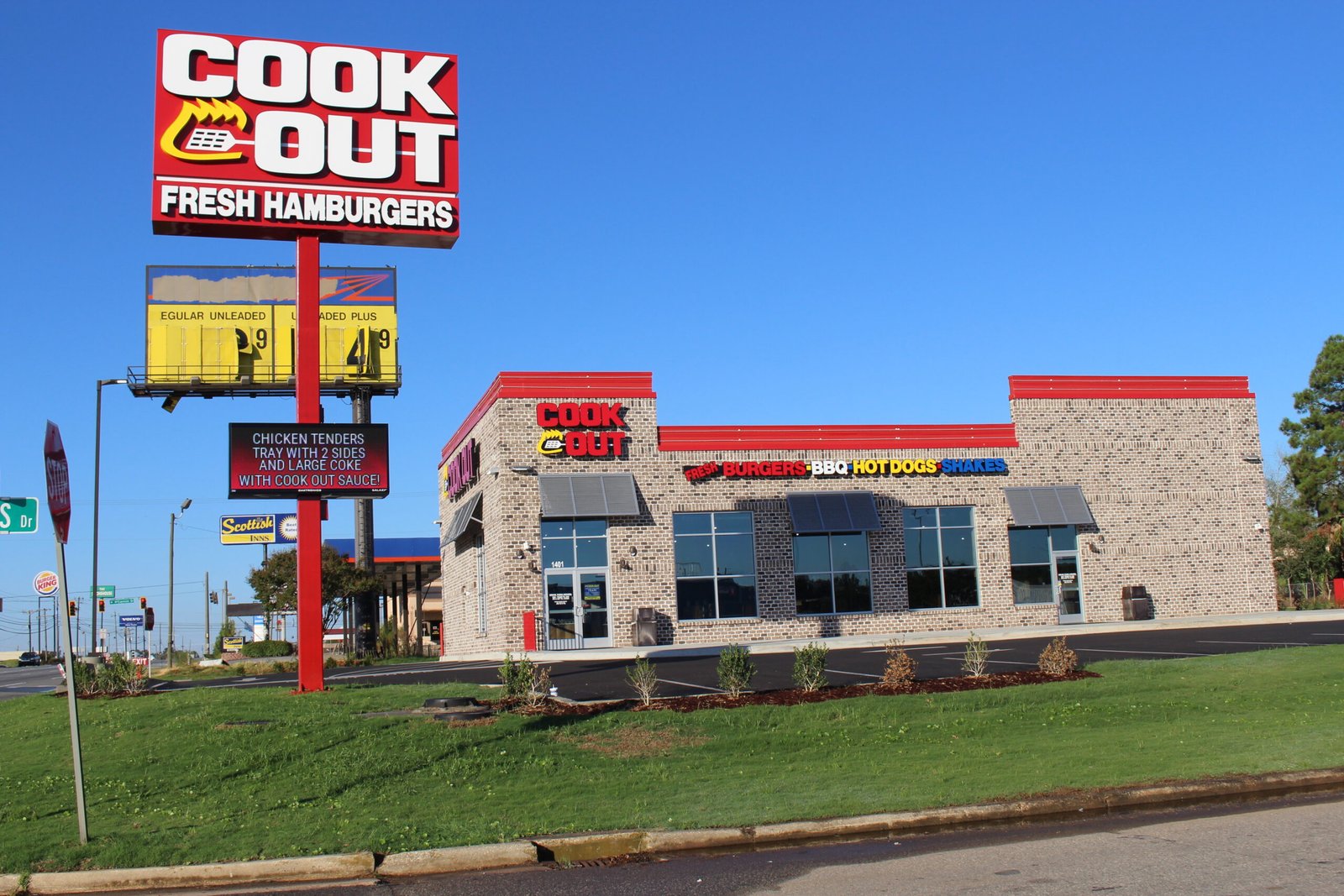
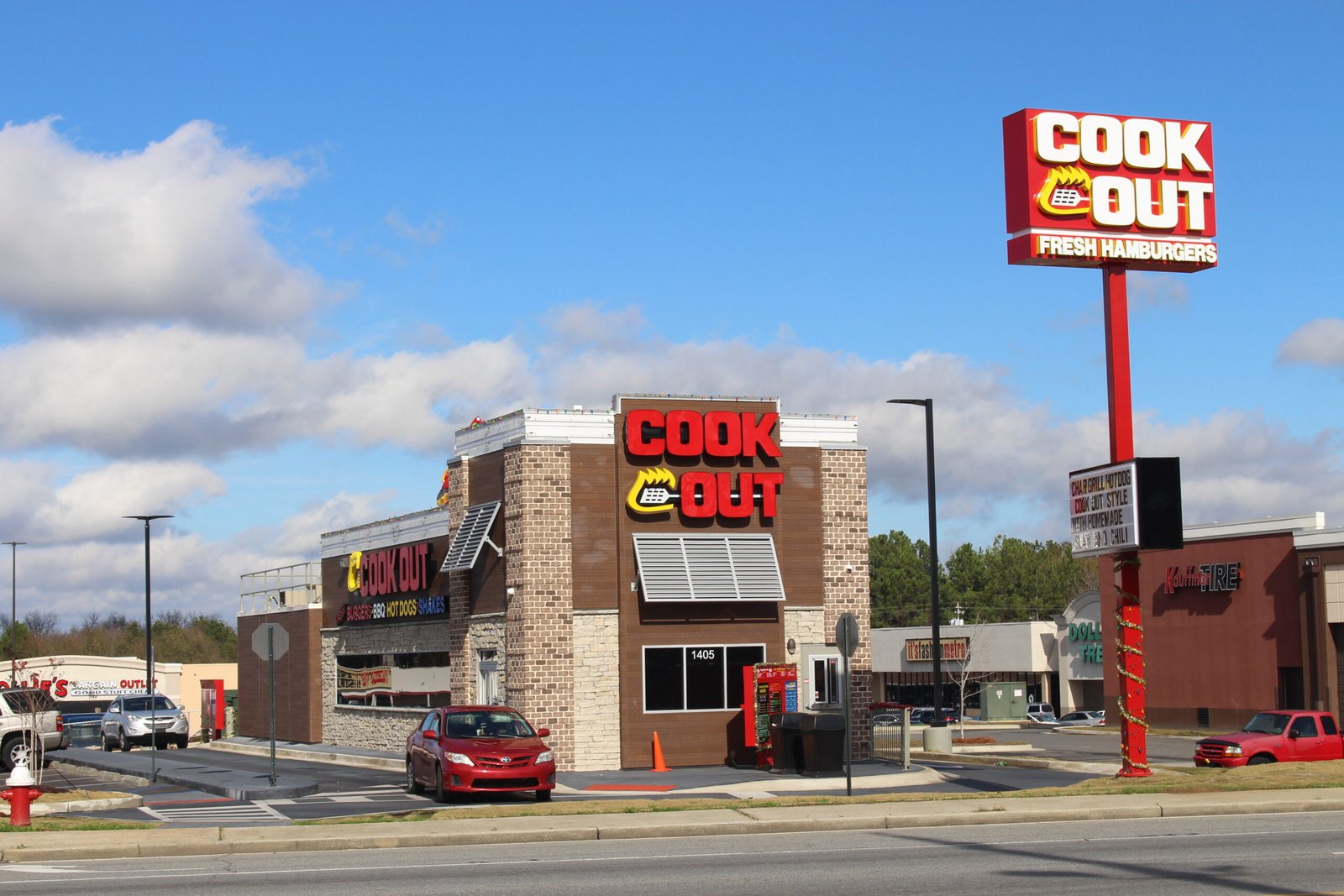
Editorial review: November 15, 2026. MenuBye is an independent editorial website and not affiliated with Cook Out. All menu choices, prices, substitutions, services and hours depend on the restaurant. Historical genuine store photographs shown below are not food-product photographs.
How a Cook Out Tray works
The company menu emphasizes a customizable tray with one eligible main, two side choices and a drink. Customers can pair a burger with two different sides rather than buying a standard burger-and-fries combination. Eligibility and portion size depend on the store’s current menu board.
Do not assume that every à la carte product can be included at no extra charge. Tray side portions can differ from full standalone servings. Before ordering, check the selected main and sides on the actual restaurant board, particularly where regional menus or special promotions alter the available choices.
Choosing a char-grilled burger main
Cook Out is known for char-grilled hamburgers that can be served with cheese, bacon, chili, slaw and various sauces. A classic burger may appeal to someone seeking the grilled beef flavor, while a heavily dressed style changes the taste and the total meal ingredients.
When selecting a burger main, decide whether you want extra toppings before choosing sides. A large burger plus two fried sides may already be a substantial meal. For people with food allergies, buns, sauces and cheese need separate consideration beyond the fact that the main contains beef.
Chicken and barbecue as tray alternatives
Chicken and Southern barbecue are important Cook Out menu categories. Depending on the branch, customers may encounter chicken strips, char-grilled chicken or barbecue sandwich options for the main part of a meal. The eligibility and portion of these foods can differ from a single hamburger.
If you want a contrasting flavor, pair barbecue with a savory side or choose chicken with a lighter accompaniment where available. Breaded chicken and sauce ingredients can introduce wheat, egg or other allergens. The specific restaurant should confirm current items and preparation rather than relying on an outdated online photo.
Regular Cook Out Tray versus Jr. Tray
Cook Out explicitly promotes a Jr. Tray option alongside larger meal combinations. The junior format is designed for a smaller eligible main, but customers should not assume that all sides are identical or that every restaurant charges one standard dollar amount.
The total food quantity depends on the main, both sides and beverage. A smaller entrée with two dense fried sides and a dessert shake may still create a large meal. Compare the actual contents and choose the regular or junior option based on appetite, not simply the label.
French fries, onion rings and hushpuppies
Cook Out has been associated with fries, onion rings and hushpuppies among its side selections. These differ in texture: fries are potato-based, onion rings use coated onions, and hushpuppies are fried cornmeal-style bites. Choosing two different sides can make the tray feel more varied.
A side-sized portion is not necessarily identical to a full order. Confirm whether the desired side is permitted with the chosen tray and whether substitutions cost extra. For food allergies, battered and fried items may involve wheat, milk, egg or shared cooking surfaces, so ask the restaurant.
Corn dogs, nuggets, wraps and quesadillas
Some Cook Out menus list corn dogs, nuggets, wraps or quesadillas as tray side possibilities. That gives the meal a distinctive mix of foods that other chains would treat as separate entrées. The local menu determines exact availability and whether a particular side is part of a limited offer.
A cheese quesadilla has different dietary considerations from coleslaw or french fries. A corn dog uses a battered frank, while a small nugget portion differs from chicken strips as a main. Check fillings, portion size, sauce and whether any specific side remains in stock before requesting it.
Three illustrative tray combinations
A burger with fries and hushpuppies provides a classic Southern-style mix. Grilled chicken with onion rings and a slaw side offers different textures. Barbecue with fries and a corn-dog-style side is another possible concept where the store permits those selections.
These combinations are examples, not guaranteed products sold in every participating restaurant. Customers should adapt the main and sides to the local board. Someone with a small appetite might prefer a Jr. Tray or a single item, while someone seeking variety may enjoy two contrasting sides.
Milkshake substitution with a tray
Cook Out is recognized for thick shakes in classic, fruit, candy and dessert-related flavors. Many tray menus allow customers to replace the standard beverage with a milkshake for an extra charge. Such a substitute is not necessarily free and may not be available in every flavor.
A shake can add substantial sweetness, calories and dairy allergens to a tray already containing several savory foods. If the dessert is important, confirm the size and upgrade cost before paying. The separate Cook Out Milkshakes guide explains flavor categories and seasonal availability.
Cook Out Tray prices and local variation
The company’s general online menu does not establish a verified nationwide rate for every tray and upgrade. Prices can differ between restaurants, and promotional or limited-time prices are not necessarily permanent. A quote for one location should not be presented as the price for every US Cook Out.
Use Cook Out’s official location finder to select the city and store, then review its current board or ordering system. To compare two meals fairly, keep the main, two sides, beverage, service channel and tax conditions the same.
Calorie and nutrition comparisons
There is no single calorie total for a customizable tray. A burger, two sides and sweet tea have different nutrition than chicken, slaw, fries and a milkshake. Cook Out provides a nutrition resource from its official menu, and it is more useful than an unsourced universal calorie claim.
If tracking dietary intake, evaluate the main, each side, sauces and chosen drink separately. Ingredient formulations and portion sizes can change; anyone with serious food allergies should contact the specific restaurant about cross-contact. Do not assume a lighter-sounding Jr. Tray is necessarily low-calorie.
Ordering at the drive-through
Cook Out has many drive-through-oriented restaurants. Before approaching the speaker, decide whether you want a regular or Jr. Tray, your eligible main, both side choices and the drink. Keeping the order sequence simple reduces confusion when multiple people are ordering.
After receiving the bag, check the smaller side items before leaving because a customizable tray may contain several packages. If a side is unavailable, ask what substitutions the store currently offers and whether the price changes. Historical storefront pictures cannot establish live operating hours.
When a tray is not the best option
A Cook Out Tray offers variety and convenient bundling, but it may be more food than someone needs. A standalone burger, barbecue sandwich or milkshake can be simpler if you are only interested in one item. The tray should be compared with a meal of similar total quantity.
For a large group, ask each person whether they prefer a separate tray or just one snack. Repeating identical sides may not suit everyone. The Cook Out Menu explains the broader food lineup, and the restaurant hub links related guides.
Frequently asked questions
What is included in a Cook Out Tray? A main item, two eligible sides and a beverage in the familiar tray format.
What is a Cook Out Jr. Tray? A smaller main-course format with store-dependent eligible choices and price.
Can I choose two different sides? The tray is designed around two side choices, subject to the store’s board.
Can a milkshake replace the drink? Many locations offer a shake upgrade, usually for an additional charge.
Does every Cook Out have the same tray prices? No fixed national rate is verified by the main corporate menu.
Can a quesadilla be a tray side? Some menus offer it, but current eligibility depends on the restaurant.
Where can I find Cook Out Tray calories? Check Cook Out’s official nutrition material and add your exact components.
Official sources and further reading
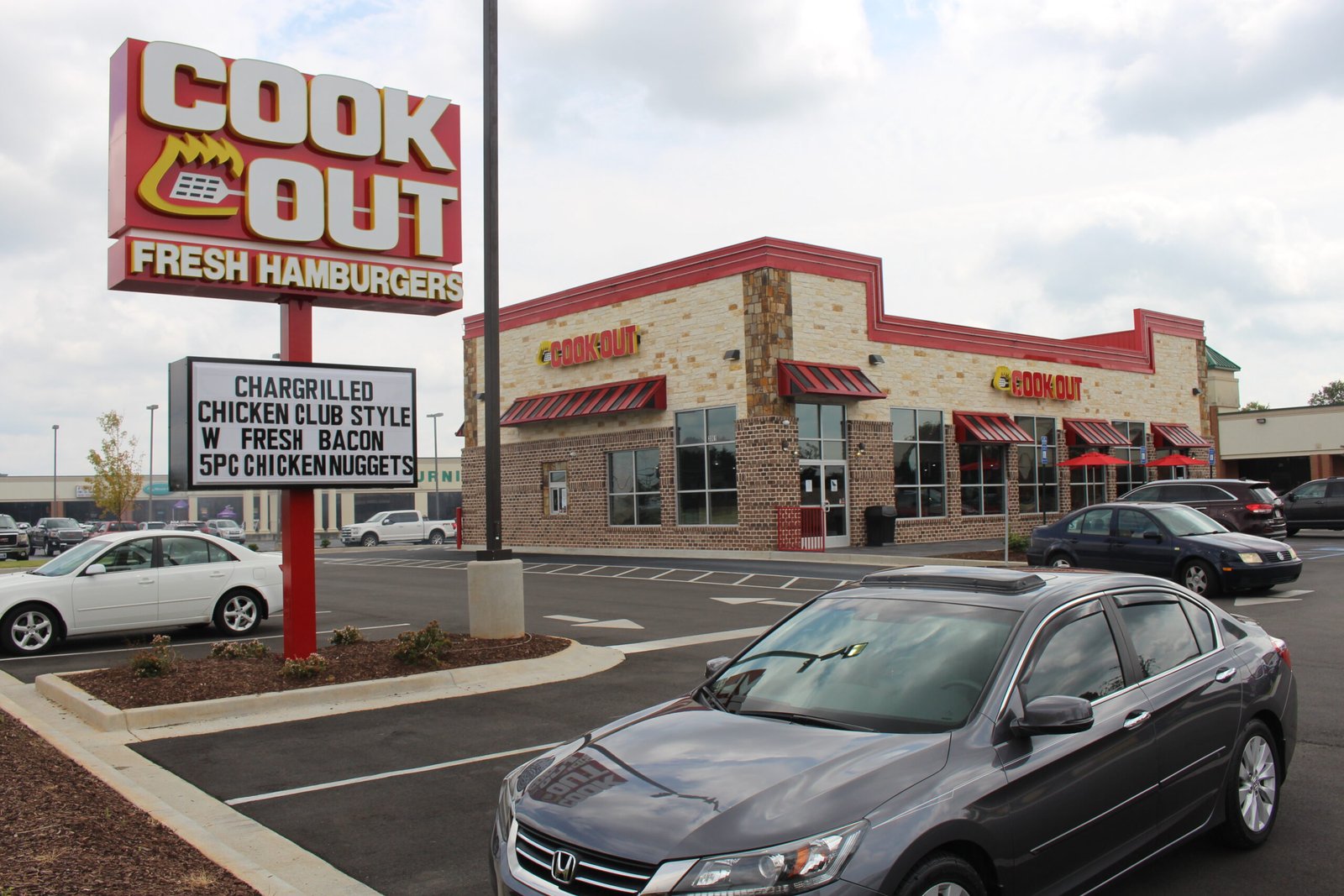
Official Cook Out Menu and Locations are primary references. For other items, explore Cook Out Menu and Cook Out Milkshakes. Featured photo is a genuine Cook Out in Warner Robins, Georgia, Michael Rivera, CC BY-SA 4.0, photographed in 2017; no photographed tray is claimed.
A practical step-by-step example for building your own tray
Consider a guest who wants the char-grilled flavor of a burger but also wants to sample the chain’s Southern-style sides. First choose an eligible burger main on the specific restaurant’s board. Then choose one side for a familiar salty texture, such as fries, and a second that provides contrast, such as hushpuppies or onion rings if offered. Finish with a regular beverage or ask about substituting a milkshake. Before paying, confirm the burger toppings, the two side selections and any surcharge. This is an illustration of the process, not a promise about every restaurant’s exact choices.
For a different example, a guest who prefers chicken can begin with an eligible grilled or breaded chicken option, depending on what the store offers. The sides should complement that main and suit the person’s appetite. If the guest is looking for a smaller meal, check the Jr. Tray and compare its actual entrée size rather than assuming a particular price or portion. When ordering for children, verify potential allergens and heat or spice levels on sauces. Finally, review the full price and contents at the drive-through, because the variety that makes the tray appealing also creates opportunities for order mix-ups.